Agencyflo vs Asana
What's the difference between AgencyFlo and Asana?
AgencyFlo vs Asana: task management, or the whole agency loop.
Hello, reader. AgencyFlo wrote this, so yes, we are biased. We still try to keep it impartial, accurate and useful. If something reads as unfair, tell us.
Intro
What Asana does well
A genuinely great task and project manager
Asana has spent over a decade refining task management. Boards, lists, timelines and a Gantt view, all fast and clean. For coordinating who does what across a team, few tools do it better.
Workflow automation and portfolios
On the Advanced plan, Asana's rules builder, bundles and portfolio views are powerful. Operations leads get real cross-project visibility and can automate a lot of the routine routing.
Proven, mature and well-supported
A huge install base, deep integrations and Asana Intelligence for AI assistance. If your team already lives in Asana and is happy, that familiarity counts for a lot.
Feature comparison
Which AgencyFlo product features Asanaships natively, and which you'd need to bolt on with a separate tool.
The structural gap
Project management is half of an agency
Asana manages the delivery of work. An agency also runs proposals, contracts, a client pipeline, time-to-billing and invoicing. In Asana that second half lives in other tools, so the numbers that decide whether a project made money sit outside the system that runs the project.
You see effort, not margin
Asana shows tasks, owners and timelines. It does not show the live margin on a project, because it never sees the rate, the budget or the invoice. By the time profitability is assembled in a spreadsheet at month-end, the project is already closed.
When Asana wins
Your work runs wider than agency client delivery
Asana is built for any cross-functional team, not just agencies. If a big slice of your work is internal or non-billable, or you need its depth of portfolio and goal tracking across departments, Asana's breadth is a real advantage.
You already run on it and it is working
If Asana is embedded across a large team and the commercial side is handled fine elsewhere, the switching cost may outweigh the upside today. A tool the team actually uses beats a better-fitting one they resist.
When Agencyflo wins
You want the money on the same record as the work
AgencyFlo runs the proposal, the contract, the project, the time, the invoice and the live margin in one system. The number that says whether a project is profitable updates as the work happens, not at month-end.
You want flat pricing that does not punish hiring
Asana is per-seat, around $25/month per user on Advanced. AgencyFlo is flat - $50/month up to 25 people - so adding a project manager or a freelancer never raises the bill.
Verdict
- Choose Asana if
- Choose Asana if your team's work runs wider than agency client delivery, or you lean on its portfolio, goals and automation depth and are happy running the commercial side in separate tools.
- Choose Agencyflo if
- Choose AgencyFlo if you are an agency that wants delivery and the money around it on one record - proposals, time, invoicing and real-time margin - instead of Asana plus a stack of revenue tools.
- The difference
- Asana is the better pure project manager. AgencyFlo is the better agency operating system, because it sees the commercial loop Asana was never built to touch.
Savings calculator
Pick your team size and the features you actually need. We'll show what Asanacosts at list price (plus the extra tools you'd add for missing features) versus AgencyFlo's flat $50/month (up to 25 people) or $100/month (above).
Pick your team size
Add the SaaS you'll need on top of Asana
No extras ticked: competitor cost is seat-only.
You'd save
$899/year
2.5× the price of Agencyflo for the same setup
Asana will cost $125/month for a team of 5 people.
Asana pricing (Advanced (annual billing)) verified 2 June 2026 from Asana's public pricing page. We refresh these figures quarterly.
Migration path
Ready to switch? Here's how.
- 01Export your Asana projects and tasks via CSV (Project menu, then Export).
- 02Import them into AgencyFlo with the migration tool, mapping Asana projects to AgencyFlo projects.
- 03Bring active work and assignees across, then connect your calendar and clients.
- 04Parallel-run for two weeks so the team confirms nothing is missing.
- 05Cut over, archive the Asana workspace and cancel the per-seat plan.
You don't have to switch everything at once
Already happy with how you use Asana? Keep it for that and bring the rest of your agency into AgencyFlo. Adopt the features at your own pace - it works whether you move the whole loop or just part of it.
Additional features on Agencyflo
Agencyflo ships the features below natively. With Asana you'd typically bolt on a separate tool for each, or do without.
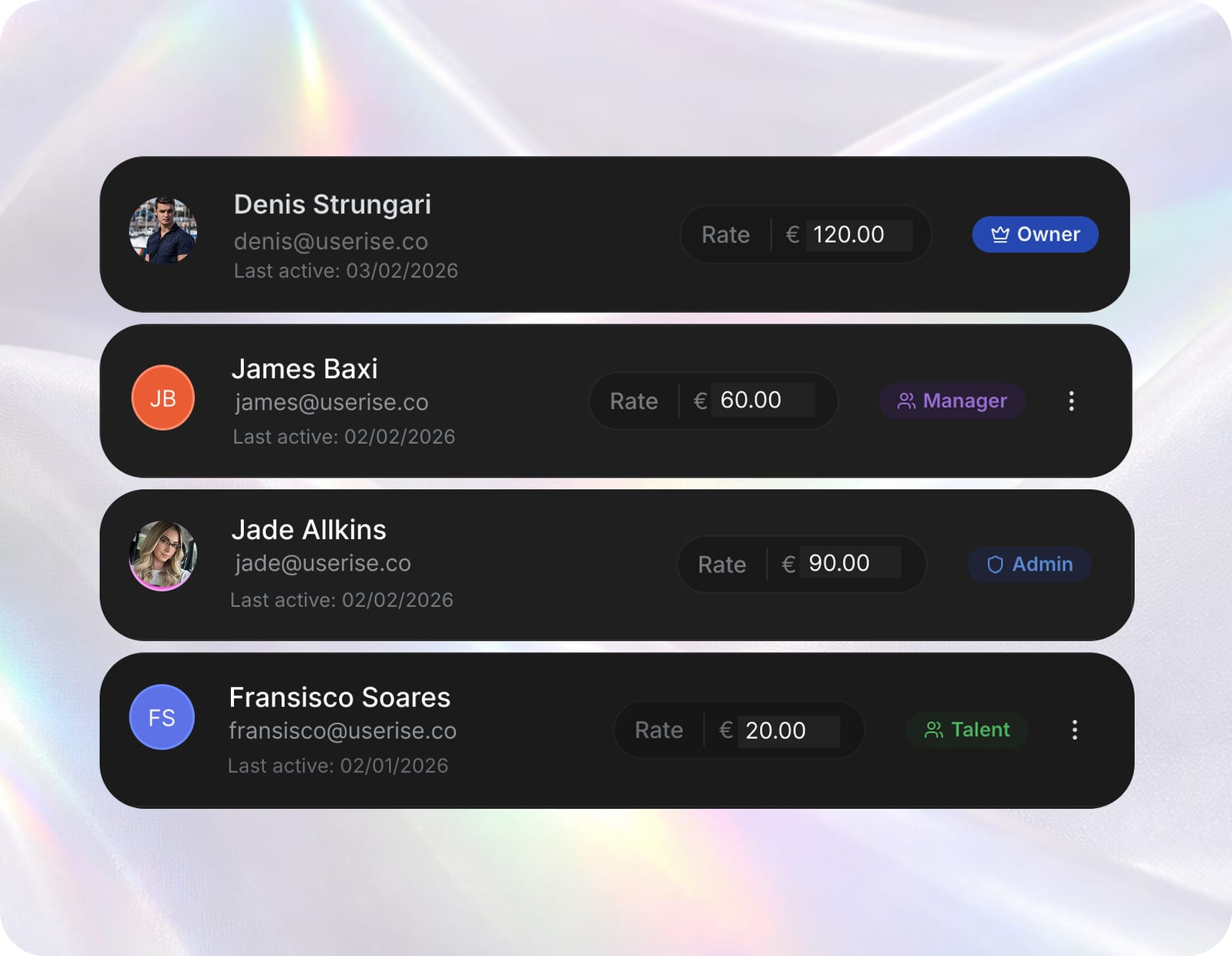
 CRMA CRM that turns client calls into pipeline.
 ProposalsProposals that close and become projects.
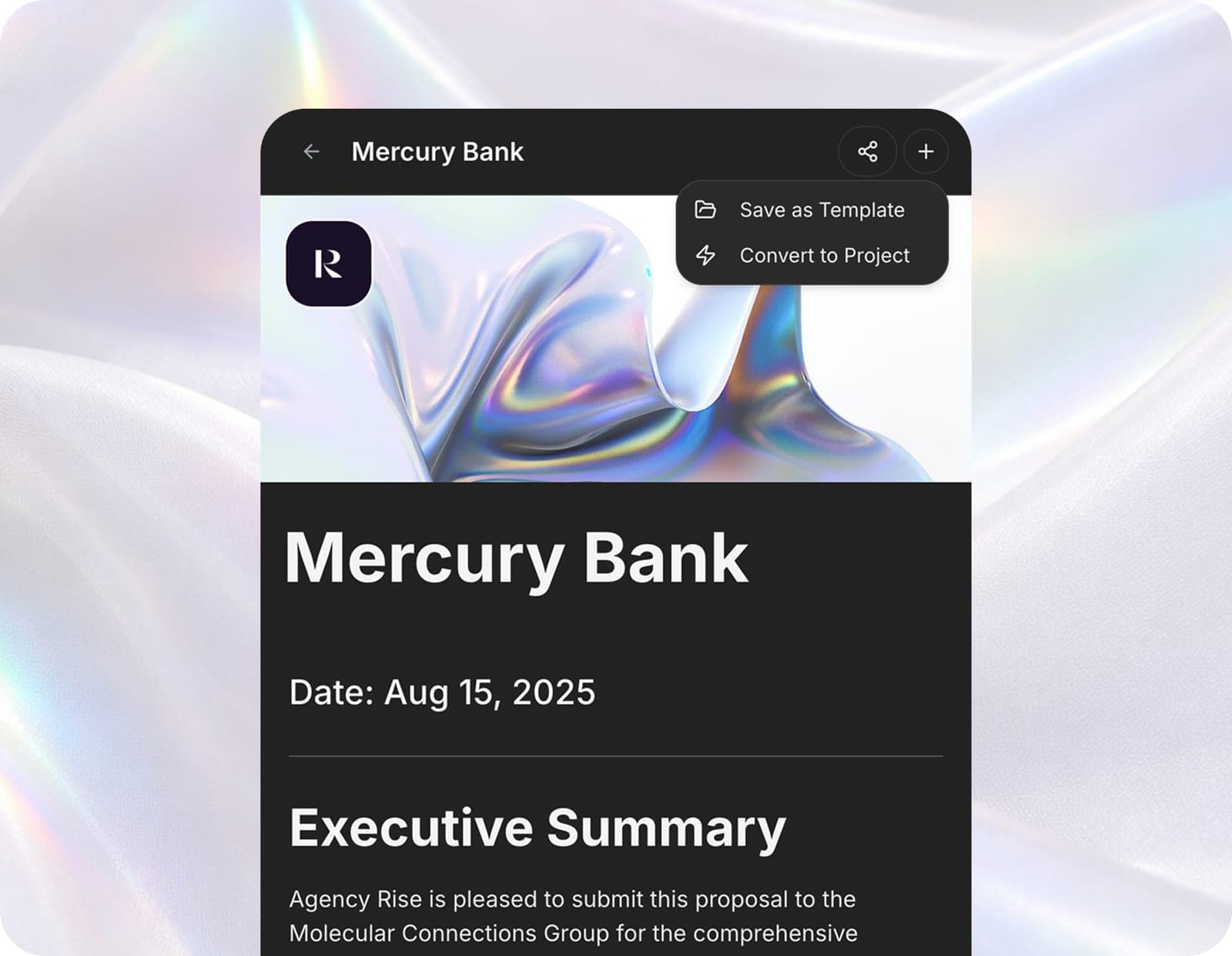 ContractsSigned contracts that live with the work.
 InvoicesInvoices that close the loop to your P&L.
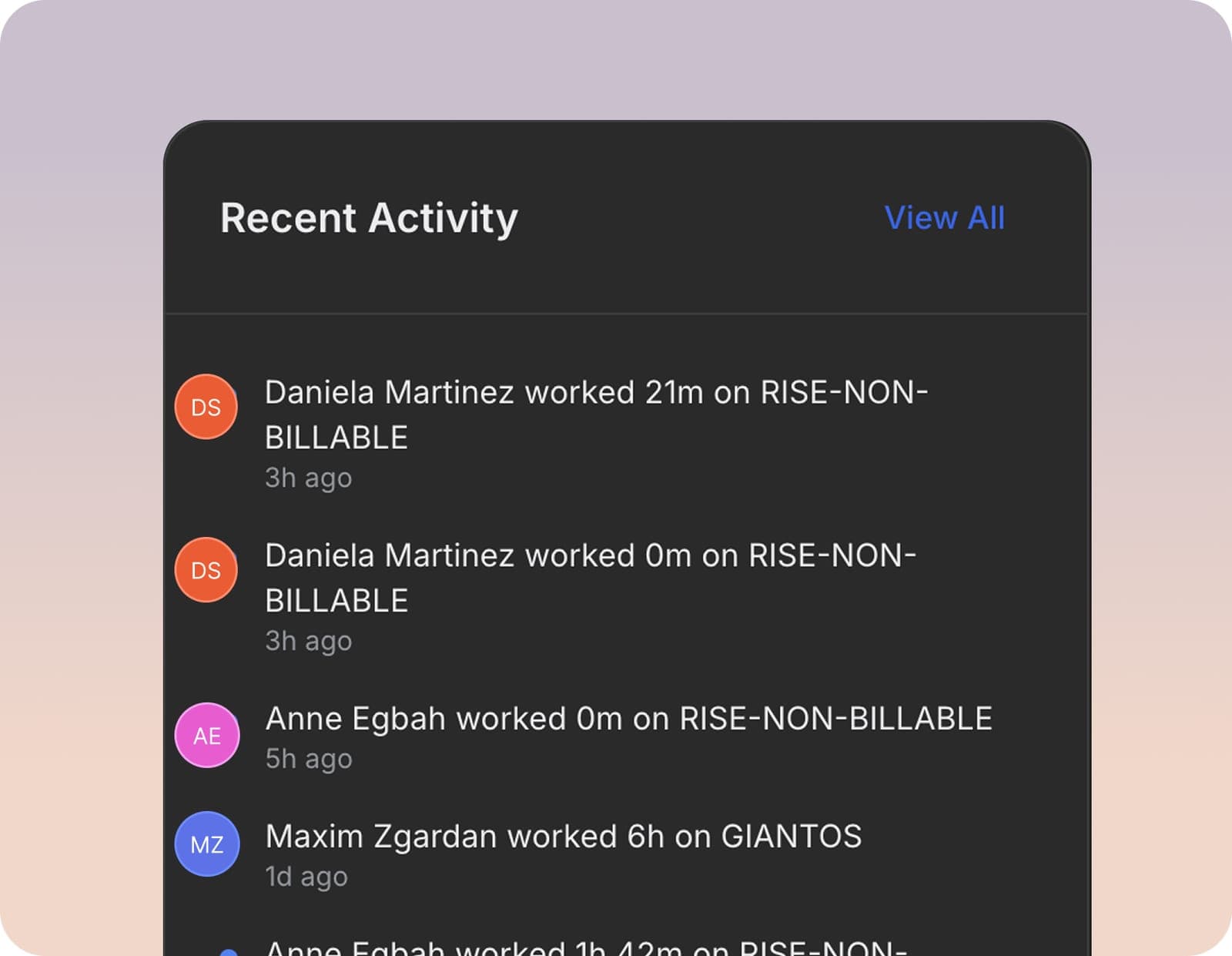 White-labelYour brand, in front of your clients.
 Meeting intelligenceBranded calls that log themselves and do the follow-up.
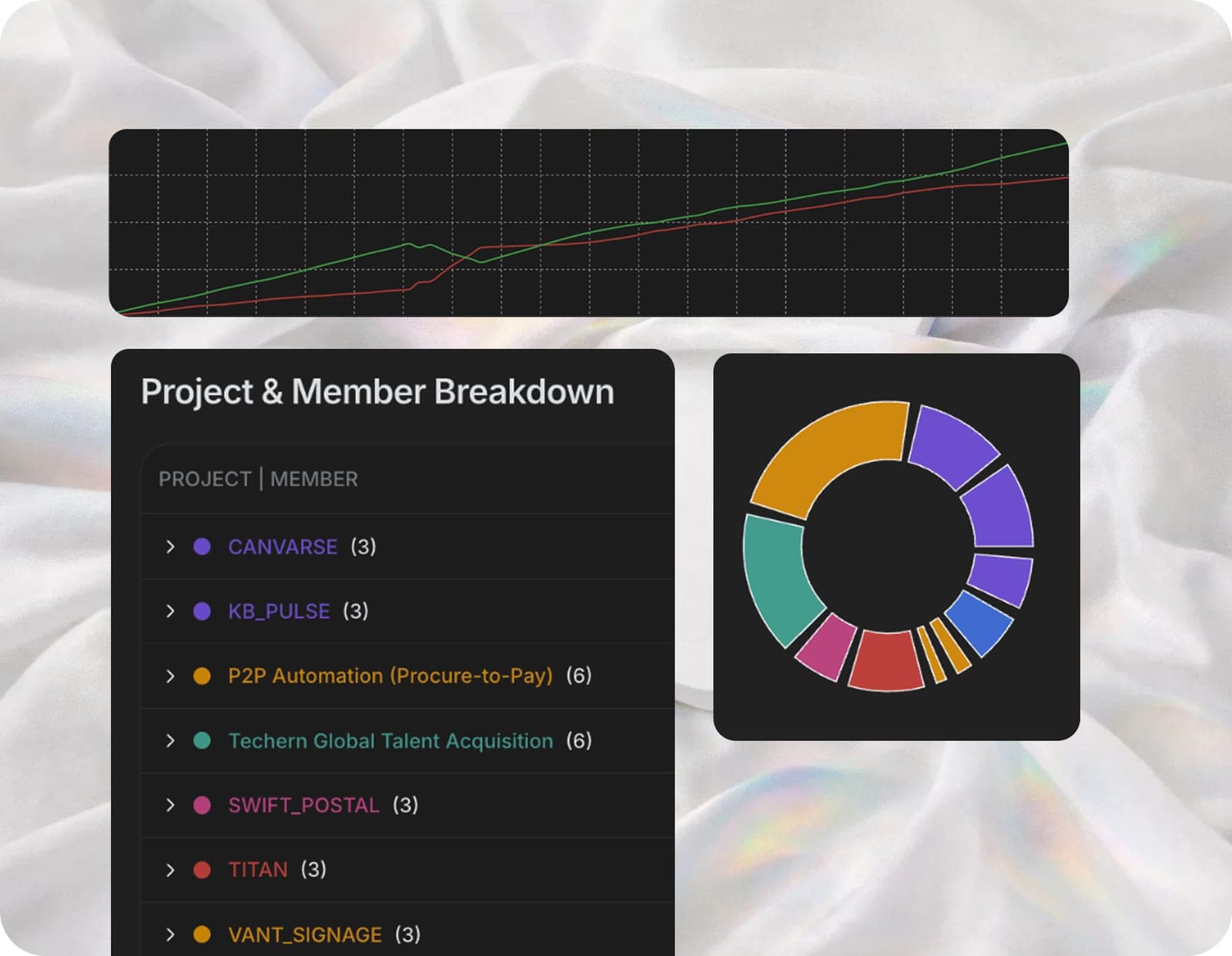 Client reportsPolished reports your clients actually read.
FAQ
Does AgencyFlo replace Asana for an agency?+
For most agencies, yes. AgencyFlo covers the project and task management Asana does, then adds the parts Asana leaves out: CRM, proposals, contracts, invoicing and real-time margin. Teams with heavy cross-department or non-agency use sometimes keep Asana for that.
Is Asana cheaper than AgencyFlo?+
Asana is per-seat, around $25/month per user on Advanced, so the cost grows with every hire. AgencyFlo is flat at $50/month up to 25 people. For a team of six or more, AgencyFlo is usually less. It also replaces several other subscriptions at the same time.
Can Asana show project profitability?+
Not on its own. Asana tracks tasks and, on Advanced, time, but it has no rates, budgets or invoices, so it cannot show margin. Agencies assemble profitability in a spreadsheet after the fact. AgencyFlo shows it live as the work happens.
Does AgencyFlo do everything Asana does?+
For agency delivery it covers the same core: tasks, boards, timelines, a Gantt view and automation. Asana has more depth in cross-functional portfolio and goal tracking for large non-agency orgs. For running an agency, AgencyFlo's advantage is everything it adds around the work.
How long does moving from Asana take?+
Most agencies are live within two weeks using the CSV import and a short parallel run. Active projects and assignees come across first, so the team keeps working while the rest is set up.


Operate and grow your agency, the right way.
The only tool your agency needs to run faster with less and make more money.