Agencyflo vs QuickBooks
What's the difference between AgencyFlo and QuickBooks?
Not really a versus: how AgencyFlo and QuickBooks work together.
Hello, reader. AgencyFlo wrote this, so yes, we are biased. We still try to keep it impartial, accurate and useful. If something reads as unfair, tell us.
Intro
What QuickBooks does well
A true general ledger
Double-entry bookkeeping, a full chart of accounts, accounts payable, bank feeds and reconciliation. This is the canonical record of your company's money, the part AgencyFlo deliberately does not touch.
Tax-ready statements
A statutory profit-and-loss, balance sheet, cash flow and trial balance, plus sales tax and VAT handling your accountant relies on at year end. When the question is "what do I owe in tax," QuickBooks answers it. AgencyFlo does not.
Built for your accountant
Accountant access, an audit trail over the books, payroll as an add-on and contractor tax tracking. The whole compliance surface lives here, where it should stay.
The structural gap
QuickBooks shows project profit too late
QuickBooks has project tracking on Plus and above, but it is bolted onto a bookkeeping tool. It shows project profitability only once costs and time are entered and categorised, which for most agencies means month-end, after the accountant has been in. AgencyFlo shows margin live, off tracked time and contract value, while the project is still open and you can still act.
What AgencyFlo means by profit
Worth being precise: AgencyFlo's profit is contract revenue minus tracked project costs, an operational margin view. A statutory P&L includes overhead, rent, payroll, software and tax, which AgencyFlo does not see and does not pretend to. It is project-level financial intelligence, not your company's complete financial position. That is the job QuickBooks keeps.
When QuickBooks wins
You need the books and the tax return
Every agency needs a general ledger. For double-entry bookkeeping, accounts payable, bank reconciliation and the statutory accounts your accountant files, QuickBooks is the right tool and you will keep it. AgencyFlo does not try to be that.
You need the company's full financial position
If your question is the whole-company picture - total profit after every cost, what you owe in tax, the balance sheet - that is a ledger question QuickBooks answers. AgencyFlo answers a narrower, more operational question about the work itself.
When Agencyflo wins
You want to catch a project before it loses money
AgencyFlo shows margin on live projects from tracked time and contract value, so you see a project bleeding margin while you can still act. QuickBooks shows it after the accountant categorises the costs, which is usually too late to change the outcome.
You are running agency margin out of a spreadsheet
Most agency owners keep a spreadsheet for project budgets and margin because QuickBooks cannot show it cleanly. AgencyFlo replaces that spreadsheet with a live view fed by the proposal, the contract, the time and the invoice. The ledger stays in QuickBooks.
Verdict
- Keep using QuickBooks if
- Your accountant or bookkeeper depends on it, or you need statutory accounts, bank reconciliation and tax filing. That is the ledger's job. AgencyFlo does not replace it, so QuickBooks stays where it is and your accountant keeps working the way they always have.
- Use Agencyflo with QuickBooks if
- You want project margin in real time, want to catch a job losing money while it is still live. AgencyFlo sits alongside QuickBooks and feeds invoice totals back into it, so the books stay complete.
- The difference
- QuickBooks is a tool for accountants. If yours needs it, keep it and add AgencyFlo for the live project margin the ledger was never built to show. The two run together: QuickBooks for the books, AgencyFlo for the work.
How to keep both
If your accountant really needs QuickBooks, here is how to keep both.
- 01Keep QuickBooks exactly as it is. It stays your ledger for the books, accounts payable, bank reconciliation and tax.
- 02Move the project-margin spreadsheet you have been maintaining into AgencyFlo: clients, active projects, contract values and budgets.
- 03Track time and run proposals, contracts and invoices in AgencyFlo, so margin updates live as the work happens.
- 04Invoice from AgencyFlo if you want the invoice tied to the project, then record or export the totals into QuickBooks so the books stay complete.
- 05Drop the spreadsheet. QuickBooks keeps the ledger, AgencyFlo keeps you on top of project margin in real time.
How to migrate to Agencyflo
If your accountant isn't dependent on QuickBooks, you're free to move all of your data to one place.
- 01Confirm with your accountant that you do not rely on QuickBooks for statutory accounts or tax filing. If a basic ledger or their own tools cover compliance, you are clear to consolidate.
- 02Export everything from QuickBooks: clients, open and historical invoices and a copy of your reports for your records.
- 03Import your clients and active work into AgencyFlo, then rebuild live projects with their contract values and budgets.
- 04Raise every new invoice from AgencyFlo, off logged time, so billing and project margin finally live in one place.
- 05Pick a clean cut-over date - the start of a financial year or quarter - and run both side by side until it arrives.
- 06Cancel QuickBooks before its next billing date so you are never paying for two systems at once.
Additional features on Agencyflo
Agencyflo ships the features below natively. With QuickBooks you'd typically bolt on a separate tool for each, or do without.
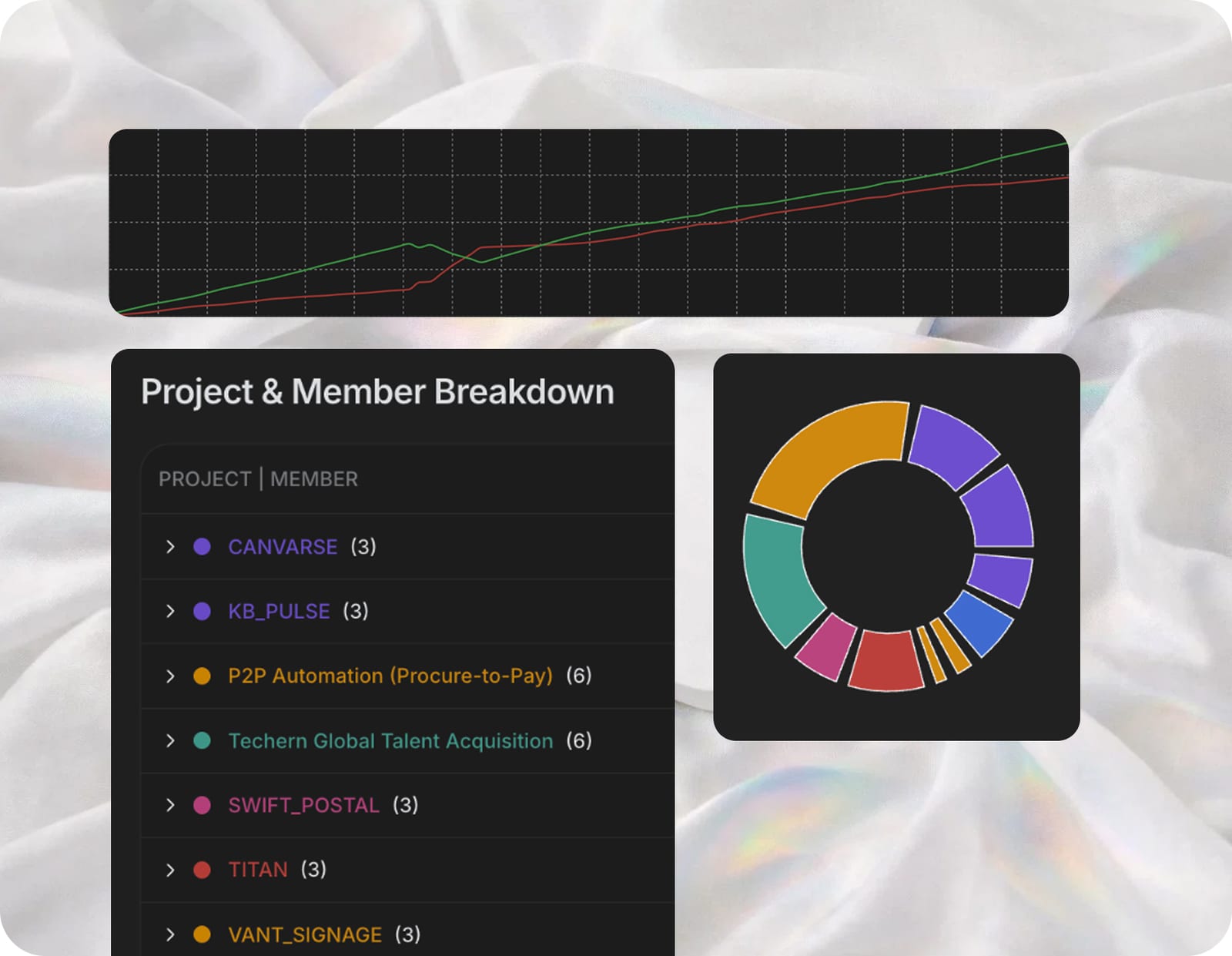
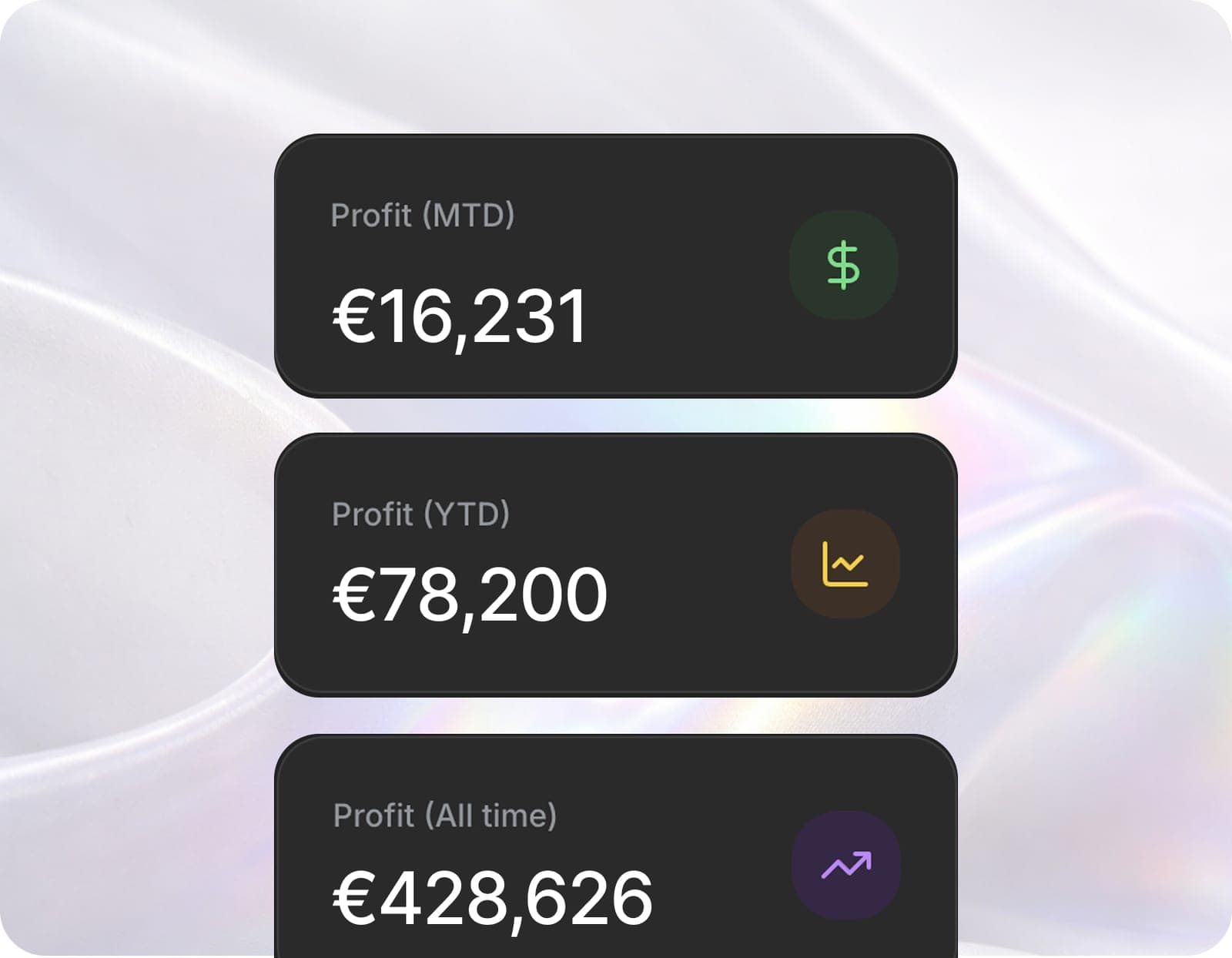 DashboardReal-time profitability across every project.
 Projects + tasksList, Kanban, Gantt and calendar on the same data.
 Time trackingTime that feeds straight into profitability.
 CRMA CRM that turns client calls into pipeline.
 ProposalsProposals that close and become projects.
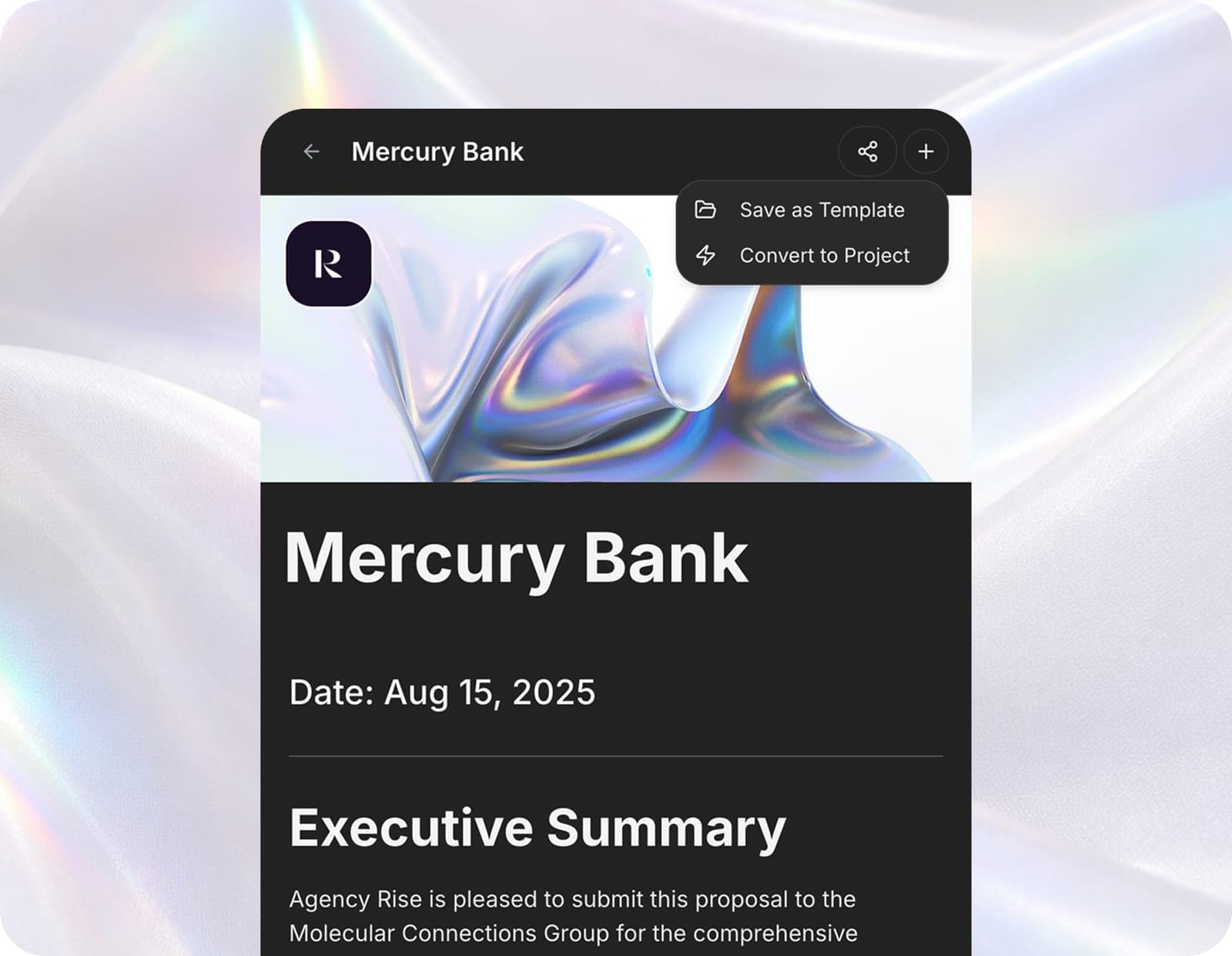 ContractsSigned contracts that live with the work.
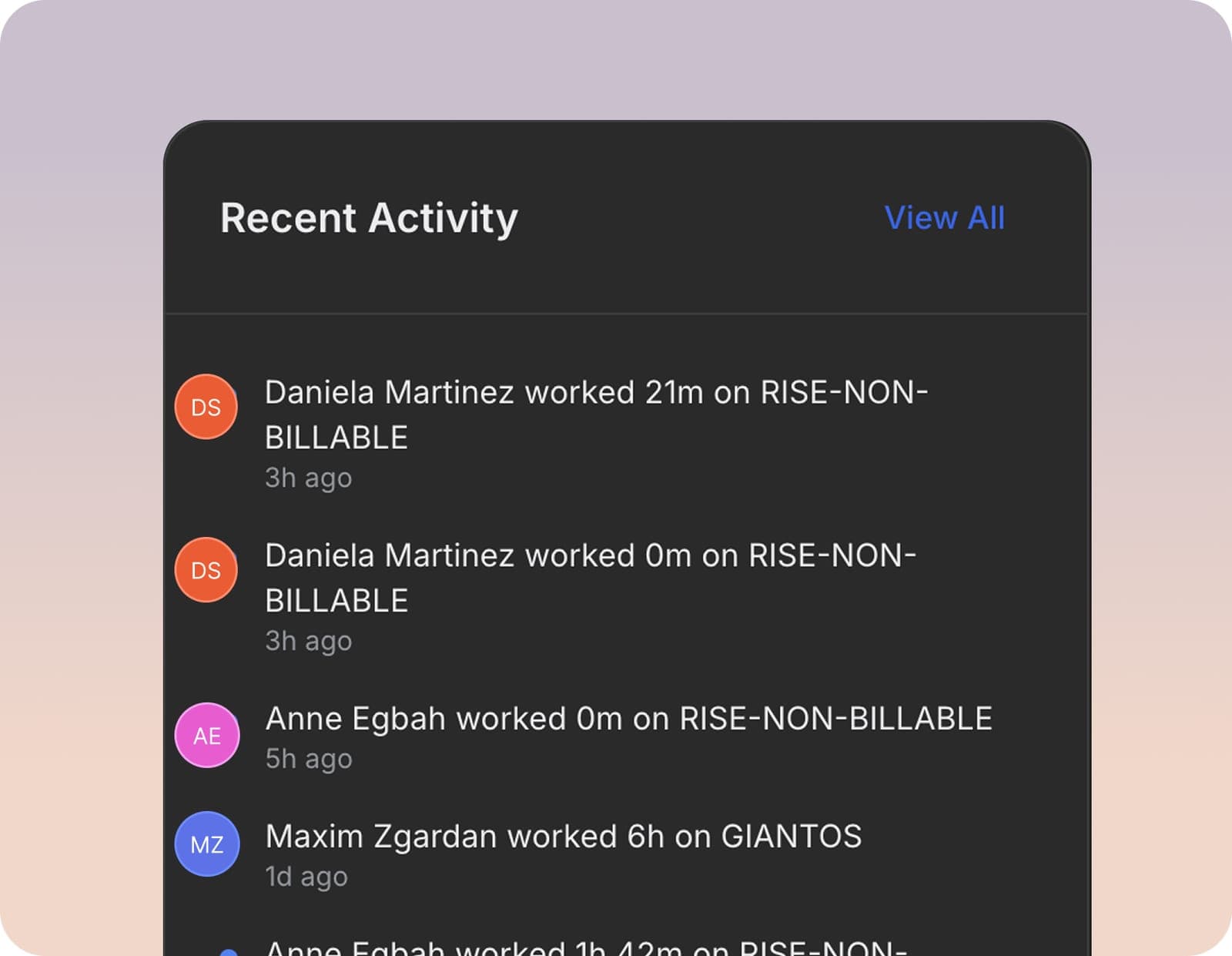 White-labelYour brand, in front of your clients.
 Meeting intelligenceBranded calls that log themselves and do the follow-up.
- AutomationsEnd-to-end agency workflows that run themselves.
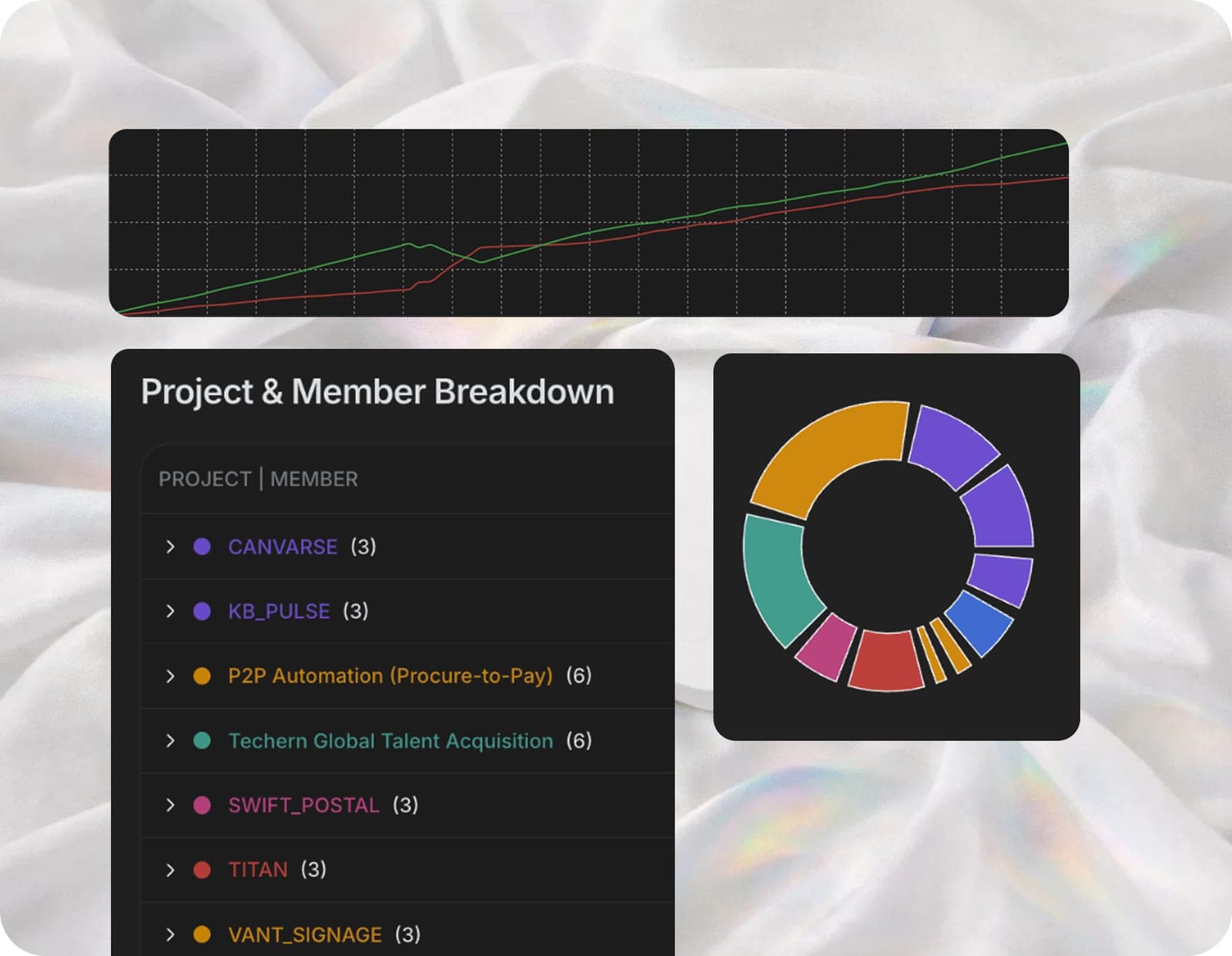 Client reportsPolished reports your clients actually read.
FAQ
Does AgencyFlo replace QuickBooks?+
No, and it is not trying to. QuickBooks is your general ledger for the books, accounts payable, bank reconciliation and tax. AgencyFlo is the operational layer that shows real-time project margin. Keep QuickBooks. Add AgencyFlo for the part QuickBooks was never built to do.
Is AgencyFlo's profit figure a P&L?+
No. AgencyFlo shows contract revenue minus tracked project costs, an operational margin on the work. A statutory P&L adds overhead, rent, payroll, software and tax, which lives in QuickBooks. Use AgencyFlo to steer projects. Use QuickBooks for the company's full financial position.
Can I invoice from AgencyFlo instead of QuickBooks?+
Yes. Invoicing is the one real overlap. AgencyFlo invoices are tied to the project and the contract, so they draft from logged time. You still record those invoices in QuickBooks (or export them) so the ledger, the bank reconciliation and the tax position stay complete.
Why not just use QuickBooks project tracking?+
QuickBooks has project tracking on Plus and above, but it only shows profitability once costs and time are categorised, which is usually month-end. By then the project is closed and the margin is fixed. AgencyFlo shows it live, off tracked time and contract value, while you can still act.


Operate and grow your agency, the right way.
The only tool your agency needs to run faster with less and make more money.